|
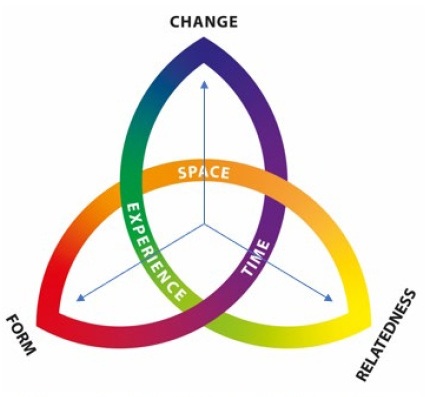
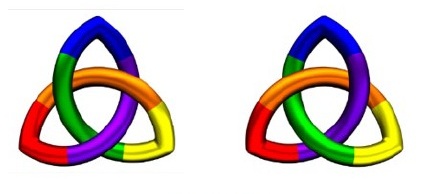
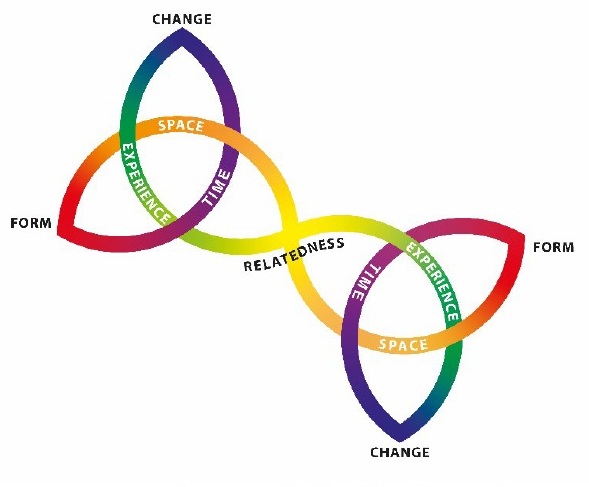
Boundary Science Research uses foundational mathematical quaternions developed by Hamilton (1843) describing how the freedom of separate edges combine into three-dimensional identity. In this approach, exploration is not limited to gathering information about a phenomenon. It also involves attending to the transformations in perception, meaning, and participation that arise at thresholds, where new forms of understanding appear.
|
 |
 |
Hamilton's quaternions were used by Maxwell in his theory of electromagnetism (1861). Quaternions approached boundaries as engaging dynamically with the whole. An aggressive countermovement wanted to keep boundaries fixed - vectors decide upon a domain which can be neutrally measured.
|
Boundary Science Research offers:
- Education: the capacity to change the boundary as places of division to places of meeting
- Communication: self-discovery, creativity, and transformation at the threshold of new understanding
- Mentorship: drawing on traditions that see beyond fixed boundaries to realise personal and community transformation
- Research: exploring how a tradition of harmonic boundary is central to the forming of living content
- Practice: creating active spaces for community empowerment by honouring different roots of wisdom
- Renewal: bringing the boundary into the whole development of an idea, a story or a conceptual picture
|
|